
Yes, you can apply for UK jobs from abroad, but only roles where the employer is a licensed sponsor and the position itself meets Skilled Worker eligibility rules will actually lead anywhere. Before you send a single application, check the employer against the Register of Licensed Sponsors and ask what SOC code and salary band the role carries. Everything else in the process depends on getting that check right first.
TL;DR:
- Ensure the employer is on the licensed sponsor register and specifically intends to sponsor the role you’re applying for, not just the company overall.
- Confirm the job’s SOC code matches the position and check that the salary exceeds the £41,700 threshold or appropriate lower thresholds for healthcare and education roles.
- Prepare your application with targeted, UK-style CVs and a clear sponsorship acknowledgment to reduce employer hesitation and administrative concerns.
- Apply within three months of receiving the defined Certificate of Sponsorship and gather all supporting documents early to streamline the visa process.
- Verify sponsorship eligibility using official sources and tools like Milo, which pre-screens listings against license and salary requirements to focus your efforts effectively.
Table of Contents
- Where to find employers that will sponsor UK jobs from overseas
- What do you need to check before applying?
- How do you prepare an application that reduces employer hesitation?
- What happens after you receive a Certificate of Sponsorship?
- What I've learned watching this process go wrong
- How Milo helps you apply for UK jobs with confidence
- Sources
- FAQ
Where to find employers that will sponsor UK jobs from overseas
Most jobseekers waste weeks applying to companies that can't legally sponsor them. The Register of Licensed Sponsors tells you which organisations hold a sponsor licence, but it has a real limitation: it doesn't show which specific roles are currently open to sponsorship. A company can appear on that list and still have zero interest in sponsoring the vacancy you've spotted.
Large employers in sectors with chronic skills shortages, the NHS, big technology firms, universities and research institutions, tend to hold licences and sponsor consistently. Searching their careers pages directly, rather than relying purely on job-board filters, usually turns up more genuine opportunities. Many licensed employers simply don't mention sponsorship in the advert text, so a keyword search for "visa sponsorship" alone will miss a lot of live roles.
A few tactics work better than scrolling generic listings:
- Cross-check any employer you're interested in against the Register of Licensed Sponsors before applying.
- Search sector-specific hubs (NHS Jobs, university recruitment portals, tech company career sites) rather than only broad job boards.
- Use LinkedIn to find current employees in similar roles and ask directly whether the company sponsors that occupation.
- Approach niche recruitment agencies that specialise in your field. They often know which employers sponsor even when adverts don't say so.
- Once you find a live vacancy, ask the recruiter or hiring manager for the role's SOC code and whether they intend to assign a Defined Certificate of Sponsorship.
Pro Tip: Don't stop at "is this company a sponsor?" Ask "will they sponsor THIS role?" A licence covers the whole organisation, but individual teams still decide, case by case, whether a vacancy is worth the paperwork.
What do you need to check before applying?
A licence alone doesn't make a job sponsorship-eligible. The role itself has to clear several separate hurdles, and it's worth checking all of them before you invest time on a tailored application.
The Certificate of Sponsorship (CoS) is the document a licensed employer issues once they've decided to sponsor you for a specific role. It comes in two forms: a Defined CoS (used for applicants outside the UK) and an Undefined CoS (used for switching or extending inside the UK). Once assigned, a Defined CoS is generally valid for three months, so timing your visa application against that window matters.
Salary threshold: As of 2026, the general minimum for the Skilled Worker visa is £41,700 a year or the "going rate" for the occupation, whichever is higher, with a lower threshold of £33,400 for some healthcare and education roles.
Beyond salary, the job needs a valid SOC code, a four-digit occupation code that determines whether the role qualifies at all. Verify it against Appendix Skilled Occupations or the Immigration Salary List rather than trusting the job title alone; a mismatch here is one of the most common reasons applications stall.
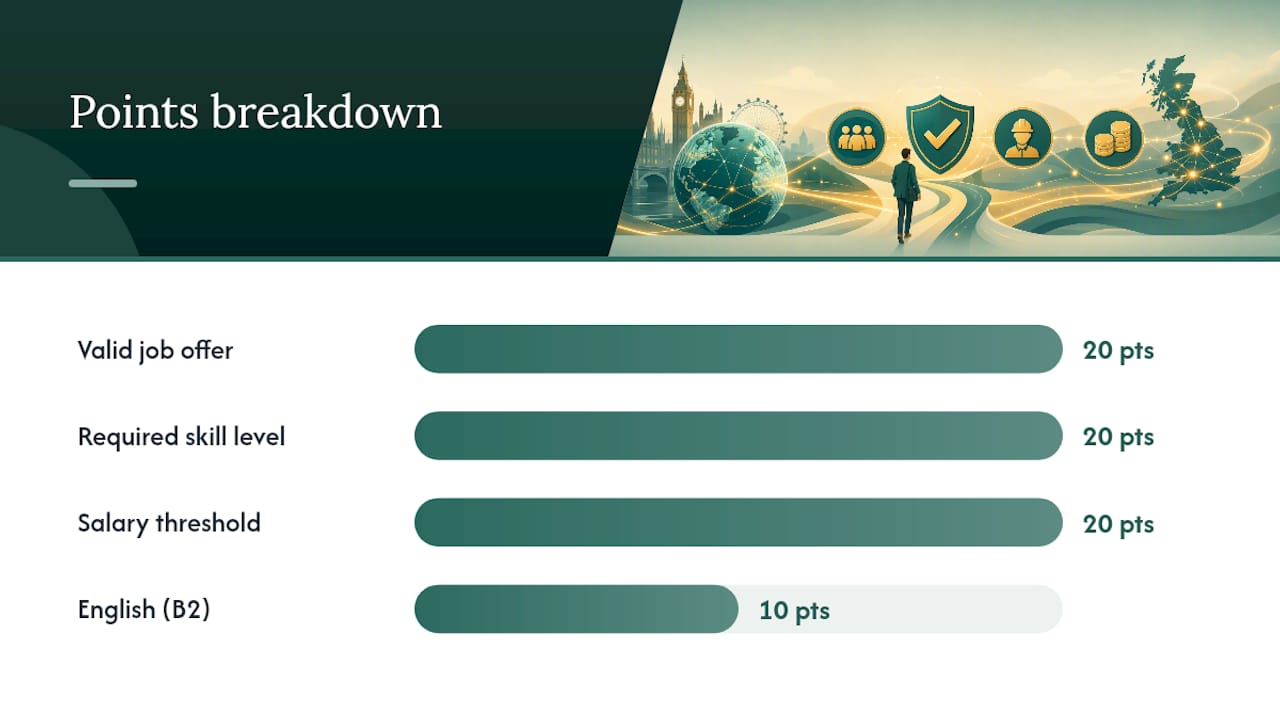
Finally, the points system: applicants need 70 points total to qualify:
- 20 points for a valid job offer from an approved sponsor
- 20 points for the role meeting the required skill level
- 20 points for meeting the salary threshold
- 10 points for English language ability at B2 level
How do you prepare an application that reduces employer hesitation?
Employers sometimes avoid sponsoring candidates simply because the process feels like extra admin. A well-prepared application makes that decision easier for them.
- Format your CV to UK conventions. Two pages, reverse chronological order, quantified outcomes rather than vague responsibility lists.
- Match your bullet points to the SOC code's requirements. If the role is coded as a specific occupation, mirror that language in your experience section.
- Write a short, practical cover letter paragraph on sponsorship. State plainly that you understand the Skilled Worker route, meet the salary and skill requirements, and can provide documents quickly, this signals lower administrative risk to the employer.
- Assemble your document pack early: passport, qualification evidence, English test results, and proof of maintenance funds if your employer isn't certifying maintenance for you.
- Prepare direct questions for HR, covering CoS assignment timing, confirmed salary band, and expected start date.
Pro Tip: Recruiters read hundreds of CVs a week. One clear line, "I meet the Skilled Worker salary and skill requirements for this role and can provide all documents within 48 hours", does more to reassure a hiring manager than three paragraphs about your enthusiasm.
What happens after you receive a Certificate of Sponsorship?
Once an employer assigns your CoS, the clock starts. You can apply for the Skilled Worker visa online up to three months before your job start date shown on the certificate, and applying promptly matters because the CoS itself has a limited validity window.
You'll need the CoS reference number, a valid passport, evidence of your English ability, and proof of maintenance funds unless your employer has certified these for you. Most applicants also complete a biometric appointment at a visa application centre, and processing times vary depending on your location and the service tier you choose.
Budget for the visa fee and the Immigration Health Surcharge on top of it, some employers cover part of these costs as part of an international relocation package, so it's worth asking before you pay out of pocket.
- Applying from abroad: gather documents early, book biometrics promptly, and track the three-month application window against your CoS.
- Switching or extending inside the UK: check whether biometric enrolment is still required and confirm your current visa's expiry date against your new start date.
What I've learned watching this process go wrong
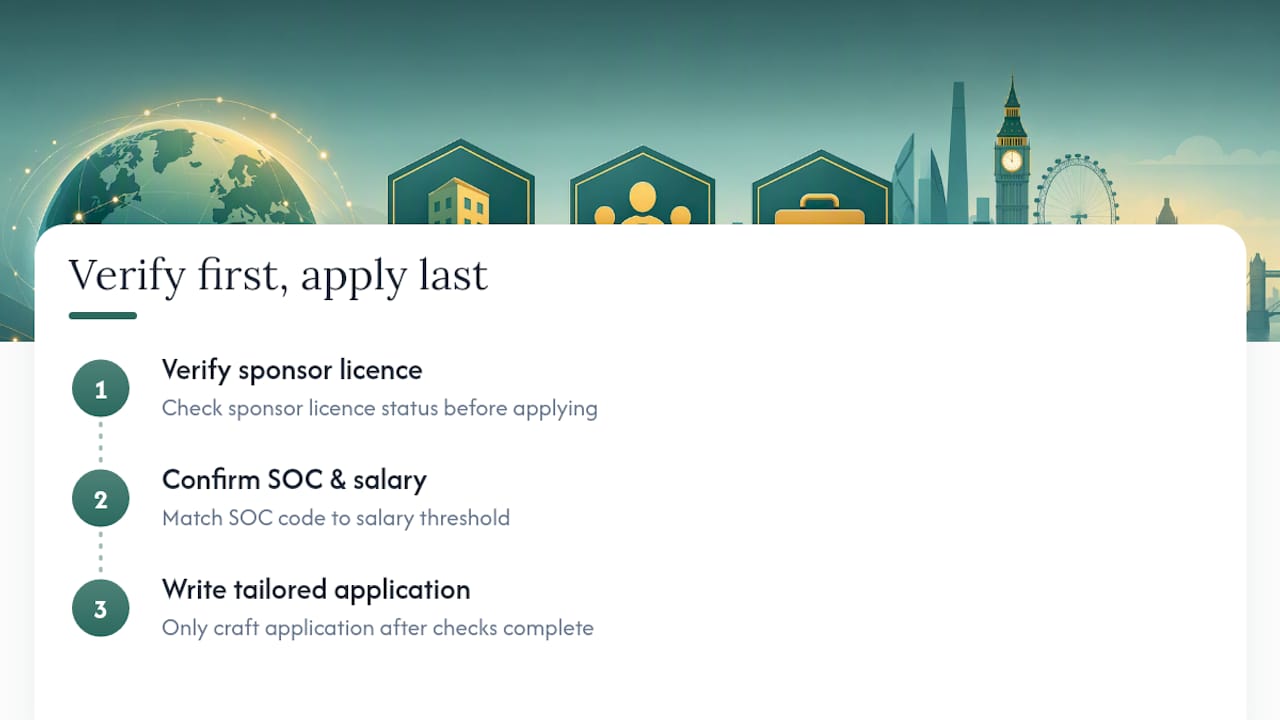
The candidates who succeed fastest do three things in order: verify the sponsor licence, confirm the SOC code and salary band, and only then write a tailored application. Reversing that order, applying first and checking eligibility later, is the single biggest time sink I see.
The most common mistake isn't a weak CV. It's applying to a role that was never going to be sponsored in the first place, because nobody checked the SOC code against the salary threshold before spending three hours perfecting a cover letter. A close second is sending the same generic application to twenty different sponsors and wondering why none of them respond; employers can tell within seconds when a candidate hasn't engaged with the specific role.
Prioritise verification over volume. Ten targeted applications to confirmed sponsors beat a hundred blind ones.
— Sumit
How Milo helps you apply for UK jobs with confidence
Milo exists because the Register of Licensed Sponsors tells you who can sponsor, not who will, for the exact role in front of you. Milo's sponsorship match service pre-screens listings against official sponsor registers and salary requirements, so you spend your time on roles with genuine sponsorship potential rather than guessing from a job title.
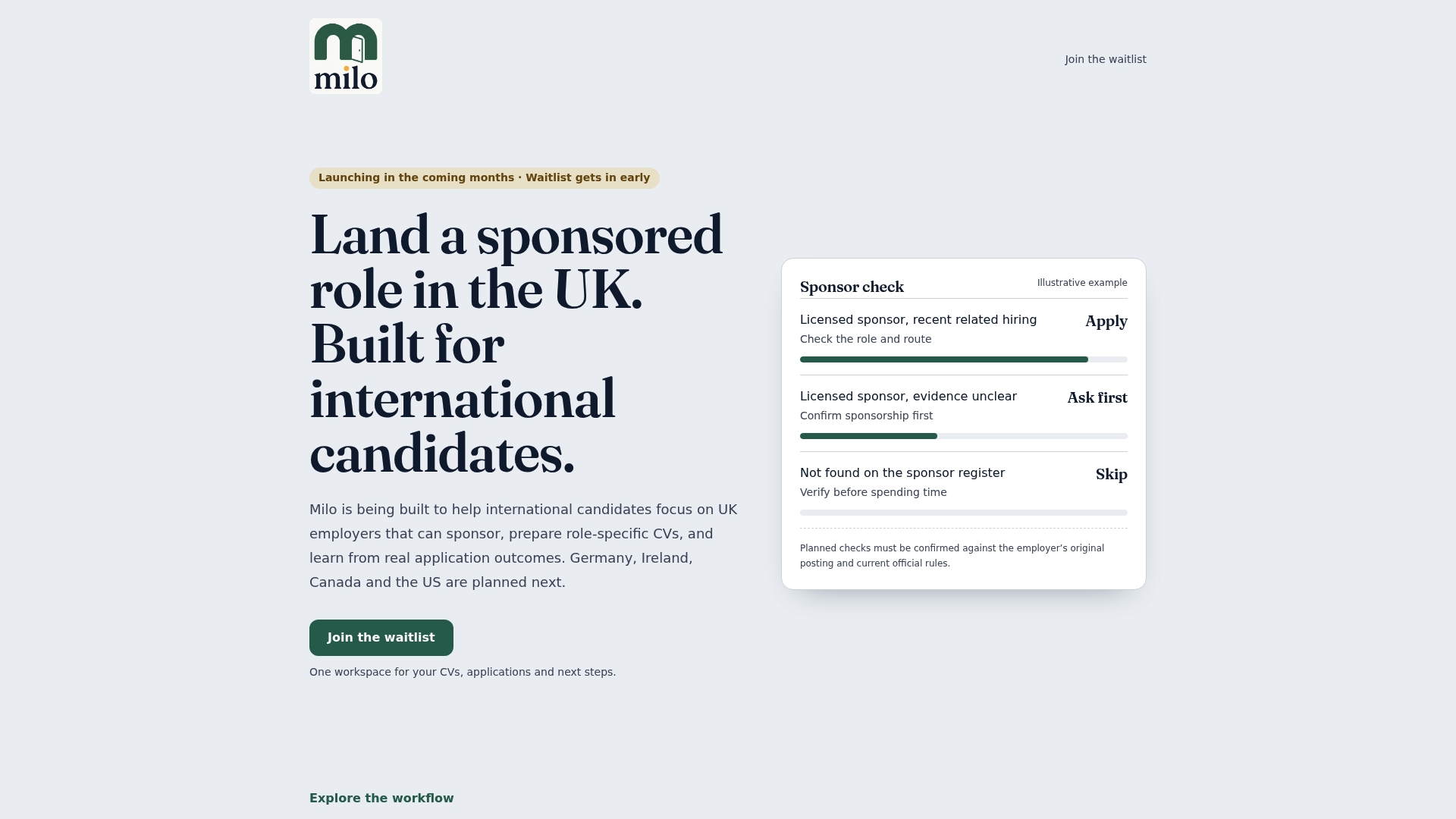
Alongside that, Milo includes a role-specific CV builder that formats your experience to UK conventions and tailors it to the job you're targeting, plus an application tracking workspace so you can see what's actually converting into interviews and adjust rather than repeat the same mistakes. The platform's stated commitment is straightforward: no invented eligibility scores, no hidden pricing, just verified sponsorship opportunities and tools built around the SOC code and salary reality of each role.
If you're ready to stop guessing which employers will sponsor you, the founding access pre-order gets you into Milo's platform for three months of focused, verified job search and application tracking. Sign up now to secure founding access before general availability opens.
FAQ
Can I apply for UK jobs from another country?
Yes, provided the employer holds a valid sponsor licence and the role meets Skilled Worker eligibility on salary and SOC code. Verify sponsor status through the Register of Licensed Sponsors before applying.
How do I know if a job qualifies for sponsorship?
Check the role's SOC code against Appendix Skilled Occupations and confirm the salary meets the £41,700 general threshold or £33,400 for eligible healthcare and education roles. A licensed employer doesn't guarantee the specific vacancy qualifies.
What is a Certificate of Sponsorship?
A Certificate of Sponsorship (CoS) is a digital reference a licensed UK employer assigns once they commit to sponsoring you for a specific role. A Defined CoS, used for overseas applicants, is generally valid for three months from assignment.
How many points do I need for a Skilled Worker visa?
You need 70 points total, made up of 20 for a valid job offer, 20 for the required skill level, 20 for meeting the salary threshold, and 10 for English language ability at B2 level or above.
Does Milo cost money to use?
Milo's founding access pre-order price is available on the Milo website rather than listed publicly elsewhere, so check current details before signing up.